Blauer & Ten C: server-side tracking to increase ROAS. What were we missing?

Server-Side Tracking: how valuable is it to measure everything (accurately)?
Blauer and Ten C are two premium fashion brands with a strong digital focus: well-structured e-commerce platforms, always-on advertising campaigns, consistent media investments, and a clear focus on performance.
Two long-standing clients, two mature businesses.
Yet, until recently, there was an invisible issue undermining strategic decision-making: traditional client-side tracking (browser-based), which leads to lower data accuracy due to AdBlockers and browser ITP (Intelligent Tracking Prevention) restrictions.
The objective moving forward was clear: recover lost events, stabilise tracking, and obtain reliable data, so that strategic decisions could be based on real and measurable numbers.
Server-side tracking: challenges and solutions implemented
We implemented a Server-Side Tracking setup using Stape, integrated with GTM Server-Side, GA4, and advertising platforms.
The full setup required preliminary analysis, implementation, data flow testing, and verification of recovered events from ad blockers.
The outcome was not only technical.
Blauer and Ten C achieved consistent and reliable data, finally gaining a clear view of the real impact of their campaigns.
Thanks to the data collected via Stape, we were able to show how server-side tracking recovered events lost due to ad blockers, stabilised key metrics, and provided a solid foundation for measuring the actual conversion rate.
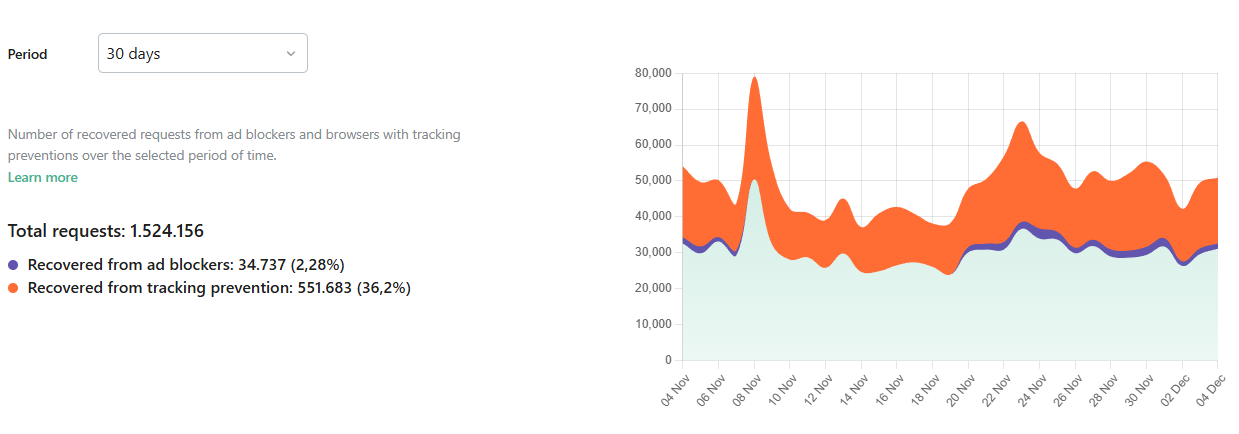
The recovery of events lost due to ad blockers and tracking prevention was significant: nearly 40% of events were recovered.
What does this mean
Thanks to server-side tracking, we are now able to collect more valuable and essential data to optimise campaigns and achieve a better return on investment.
In other words: better conversions, higher volumes, and lower costs.
Our approach
We followed a clear strategic path:
- Complete audit of existing tracking to identify anomalies and missing events.
- Server-side tracking configuration, flows testing, verifying that each event was recorded correctly.
- Comparison of post-implementation data with the same period of the previous year, highlighting concrete improvements and recovery of lost events.
At the same time, Stape's dashboard showed the recovery of events:


By doing so, the brands were able to make decisions based on solid data, reducing uncertainty and increasing the predictability of advertising performance.
Results and key figures
In the 30 days following implementation, both Blauer and Ten C recorded concrete and immediately measurable improvements in their digital campaigns.
Server-side tracking resolved pre-existing tracking issues, recovered events lost due to ad blockers, and stabilised key metrics, finally providing a clear and reliable view of performance.
What did the key numbers tell us?
Blauer
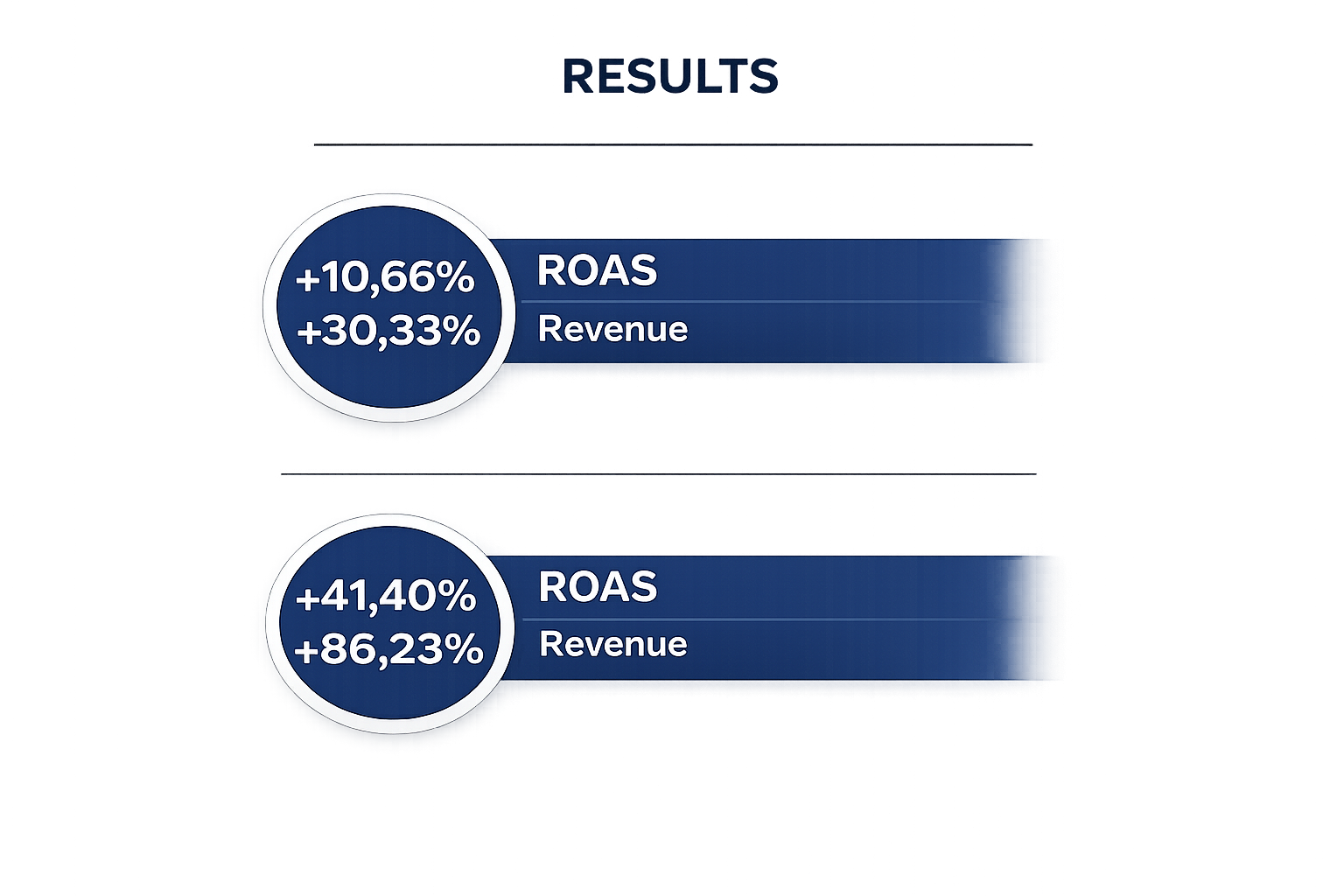
- ROAS: +10,66%
- Revenue: +30,33%

Ten C
- ROAS: +41,40%
- Revenue: +86,23%

The implementation of server-side tracking did not only correct tracking discrepancies but also provided a reliable foundation to accurately evaluate the impact of advertising campaigns.
This improved the ability to optimise performance and plan future strategies.
The value of server-side tracking
This case clearly demonstrates how server-side tracking can transform incomplete data into concrete and measurable insights.
The increase in ROAS and the stabilisation of revenue show that, beyond improving key metrics, the solution enables faster and more reliable media decision-making.
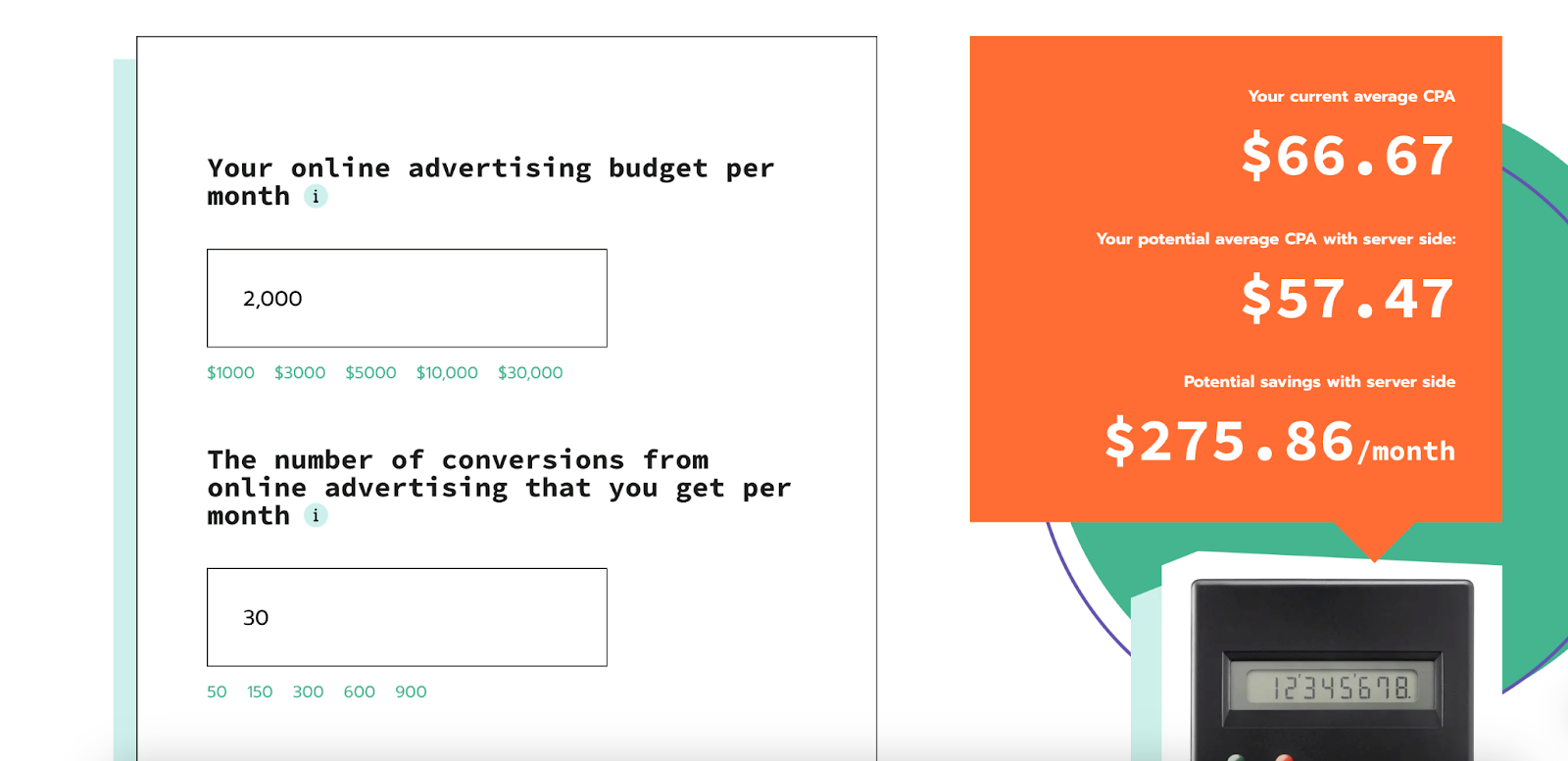
In addition, thanks to Stape’s ROAS calculator, brands and clients can estimate in real time how much CPA could be reduced through the implementation of server-side tracking.
This tool helps make the concrete value of the service tangible, clearly showing its impact on advertising campaigns.
The Blauer + Ten C case does not only confirm the technical effectiveness of server-side tracking: it also shows how a proper data flow can become a growth and competitive advantage tool.
This provides accurate insights to guide future campaigns and maximise return on advertising investment.

Giovanni Coppola