AI and lead quality: how much does AI visibility weigh?

For years, acquisition was read more or less the same way: Google, advertising, direct traffic, referrals.
Today, that balance is shifting.
A growing part of discovery now also happens through ChatGPT, AI engines, and new generative search experiences, where people are not just looking for a link, but for an answer, a comparison, or a recommendation.
Google itself describes AI Overviews and AI Mode as experiences built for longer, more specific questions with follow-ups, which makes them much closer to a decision journey than to a simple keyword search.
So the useful question is no longer just “how much traffic comes from search”.
It is: how much does AI already matter in my discovery, evaluation, and lead-generation mix?
It is not just a volume issue
The interesting point is not only that AI-driven traffic is growing.
It is that, in several cases, it already seems to bring stronger quality signals than average.
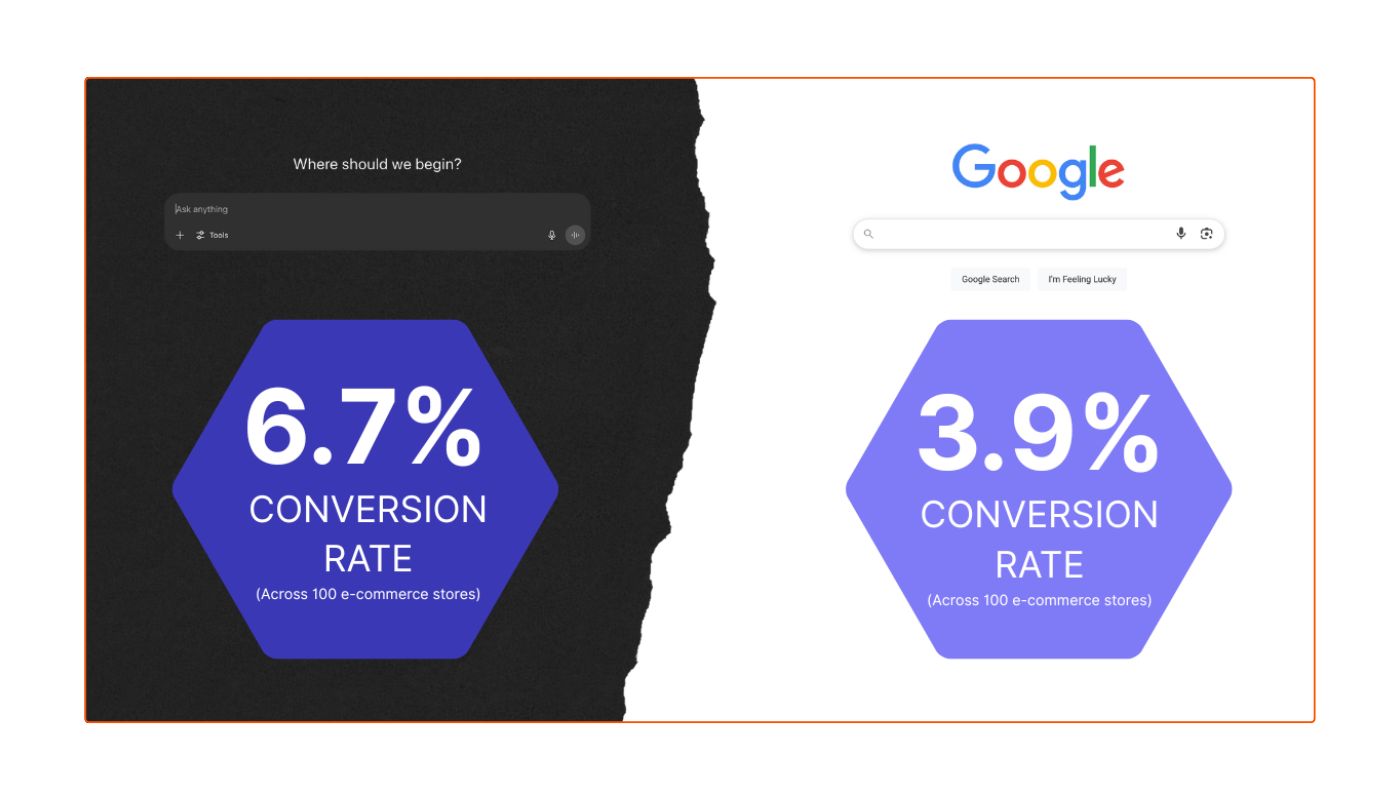
ThoughtMetric, analysing 100 ecommerce stores on May 2025 data, found an average conversion rate of 6.7% for ChatGPT traffic, compared with 3.9% for Google Search traffic.
Adobe, looking at a different sample and methodology, also observed that AI-driven traffic in retail and travel often arrives better informed.
With stronger downstream behaviour and higher conversion efficiency in key moments.
Translated into something simple: AI is not only capturing attention. It is starting to affect traffic quality and, as a result, lead quality too.
Why AI traffic can convert better
The point is not that “ChatGPT converts better by magic”.
The point is that users arriving from an AI environment often arrive after a more advanced discovery phase: they have already seen a comparison, filtered options, or received a first synthesis.
In other words, the click is not always driven by curiosity.
It is more often driven by a partially formed decision.
That is also we're starting talking about AI users as users who often land with better intent and stronger engagement signals once they reach the site.
And research published in Marketing Science on ecommerce referrals from ChatGPT points to the same pattern, using early evidence from ThoughtMetric and other work on the commercial value of generative AI traffic.
That does not mean volume alone is enough to redesign a whole media mix.
But it does mean that dismissing the channel because it is “still small” risks missing an important signal: less volume, but potentially more intent.
AI visibility: visibility is no longer won only in rankings
If people are discovering and comparing solutions inside AI environments, the next question becomes obvious: does my brand actually appear in those contexts?
Semrush defines AI visibility as how often a brand is mentioned, cited, or recommended in answers generated by platforms like ChatGPT, Perplexity, and Google AI experiences.
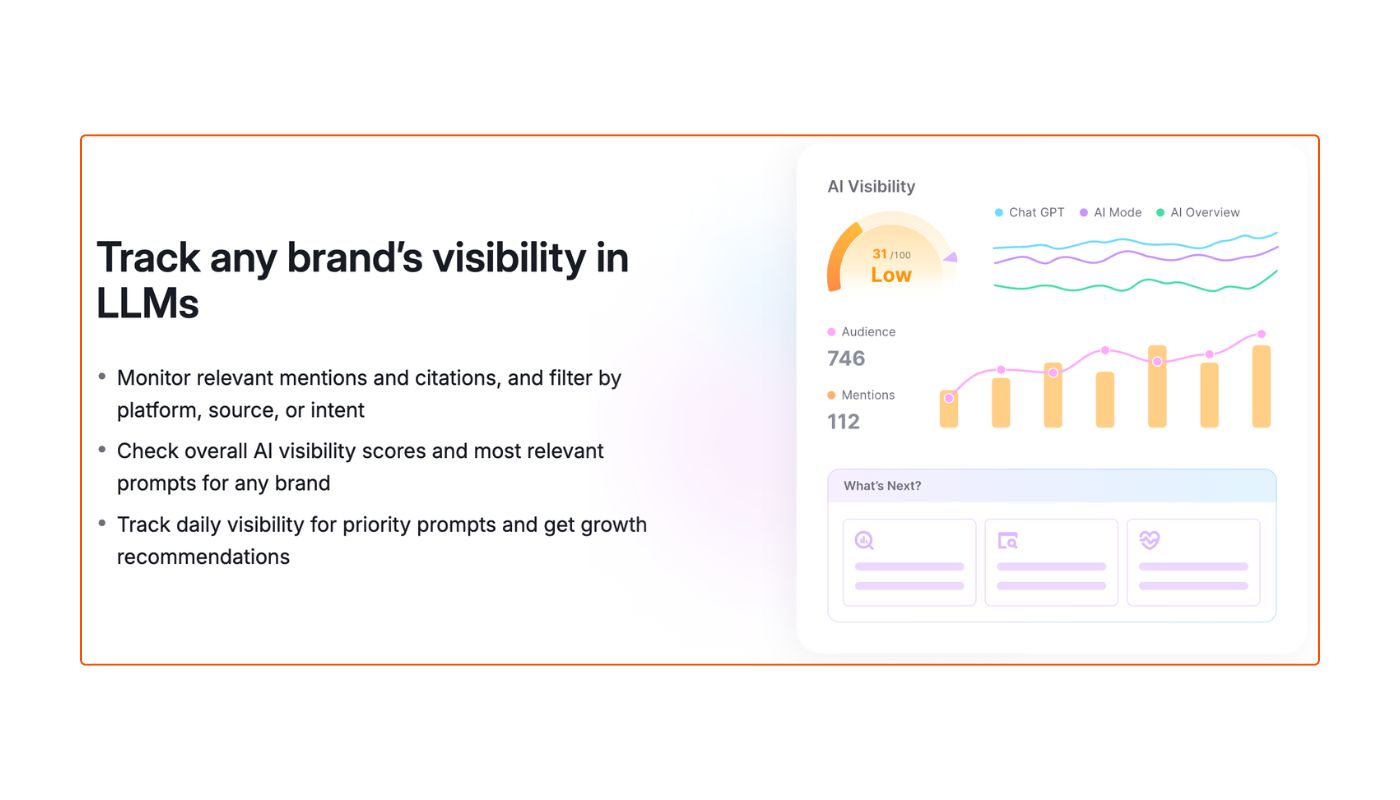
It is a useful definition because it shifts the focus away from the website visit alone and toward something broader.
Tthe brand as a recognised reference inside a flow of response, recommendation, and comparison.
This also changes what visibility actually means. It is no longer just about "being ranked".
It is about being readable, citable, and selectable when the system synthesises an answer.
How to get found in new AI environments
It helps to be clear here: it is not enough to “be online”, and it is not even enough to do SEO in the classic sense.
Google, when talking about AI features and the relationship between websites and AI search, keeps pushing a very clear line.
Content needs to be useful, non-commodity, clear in its main purpose, and easy for both users and systems to understand.
The same logic shows up in AI visibility tools and benchmarks too: the brands that surface most often tend to have clearer sources, stronger pages, and more coherent signals, not just more content.
In practice, increasing the probability of being found and cited in AI environments usually requires three things:
- readable, answer-first content, so pages respond clearly and quickly;
- trust signals, such as proof, reviews, sources, and brand consistency;
- clear structure, because if a page is hard to read or extract from, it becomes weaker as a source too.
Search, AI, and lead quality: why they now need to be read together
One of the easiest mistakes today is to read these as separate worlds.
On one side, SEO. On the other, AI.
Then lead generation. Then conversion.
In reality, they are starting to overlap much more than before.
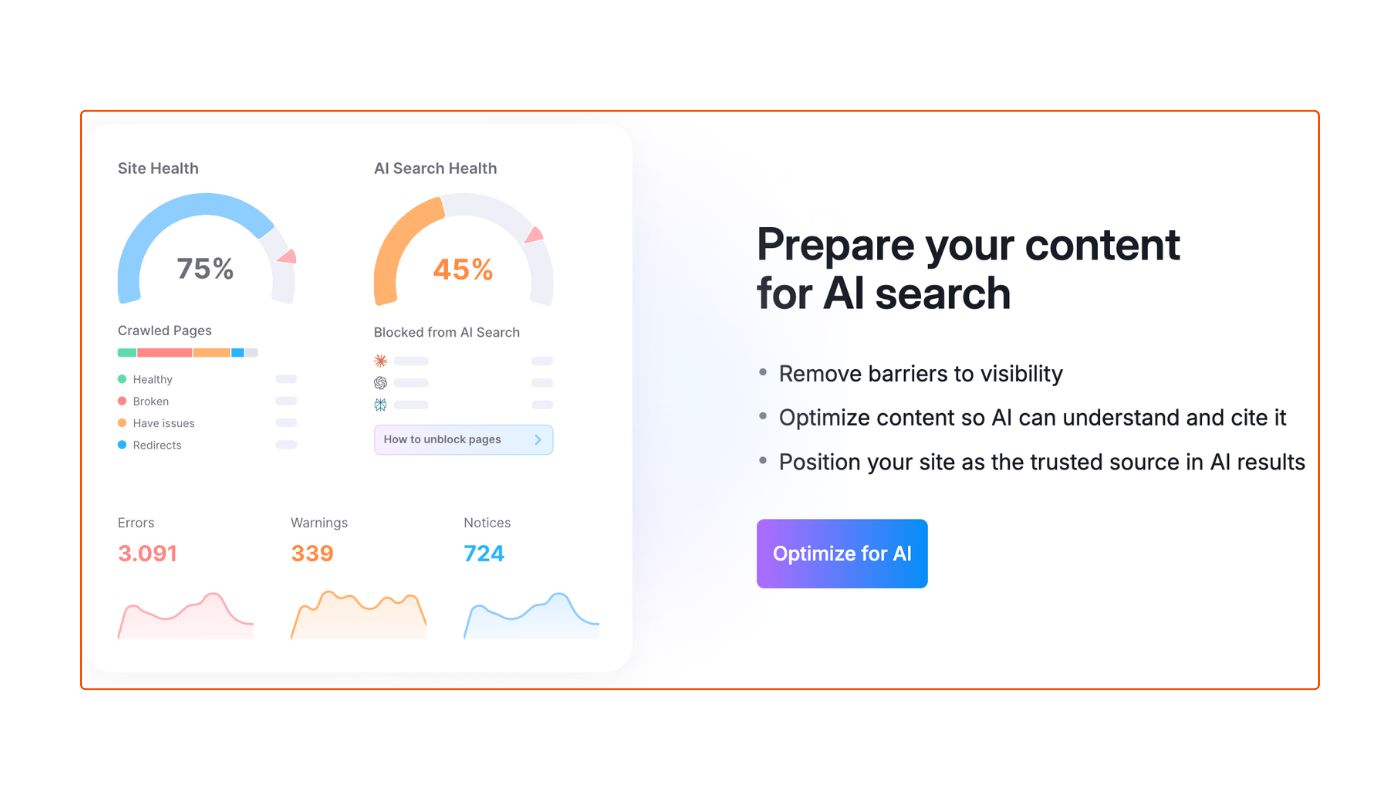
If part of demand now passes through AI search, and if that traffic often arrives with stronger intent, then search, AI visibility, and lead quality need to be read as parts of the same journey.
It is not just about “how many clicks come from ChatGPT”.
It is about understanding:
- whether the brand is being cited in moments of discovery and comparison;
- whether the site is ready to turn that traffic into a relevant enquiry;
- whether leads from these environments show stronger signals than leads from other sources.
How to start measuring it without overcomplicating things
You do not need a futuristic dashboard.
You need to start from a few simple questions:
- How much traffic already comes from AI-referred or AI-like environments?
- What quality do those leads have compared with the rest?
- In which prompts, topics, or categories is the brand already being mentioned?
- Which pages on the site are actually ready to receive a user who is already “warm”?
Operationally, the most useful metrics tend to be:
- AI-referred traffic, where you can isolate it
- conversion rate and lead quality by source
- brand presence across AI prompts and answer environments
- post-click behaviour on key pages
- assisted conversions between content, service pages, and enquiries
The point is not to treat AI as a separate channel just because it is fashionable.
The point is to understand whether it is already becoming a real part of your acquisition path.
Want to understand how much AI already weighs on your leads?
If part of discovery is already happening through ChatGPT, AI engines and new search experiences, the point is not only to measure traffic.
It's to understand how much that traffic really affects lead quality.
RichClicks can help you analyse AI-referred sources, conversational queries, landing pages and assisted conversions to understand whether your content is already contributing to lead generation.
The issue is not just being present, but actually carrying (AI) weight
AI is no longer only an experimental environment or a conference topic.
It is gradually, but quite concretely, becoming a place where brands are discovered, compared, and in some cases already chosen.
That is why the issue is not only how much visibility you can get.
It is how much that visibility already matters in terms of qualified traffic, lead quality, and the ability to enter the decision process when the answer is being synthesised before the click even happens.
AI and lead quality: search, visibility, and how to get found
If a growing part of discovery now happens through AI environments, the useful question is not whether this channel matters.
It is how much it already matters for your brand, and whether you are doing enough to turn it into a lever instead of leaving it to work in somebody else’s favour.
Because in these new discovery environments, it is not just the brand that is present that wins.
It's the brand that is clear enough, credible enough, and easy enough to choose to turn visibility into a real advantage.

Giovanni Coppola